


.svg)


.svg)
.svg)


.svg)


The integration layer is your hedge against an unpredictable future
For years, consolidation offered hotel brands a compelling answer to growing technology complexity. Fewer technology providers and integrations promised a simpler environment to manage, while avoiding the web of point-to-point connections that often came with best-in-breed technology.
That tradeoff made sense. As brands added specialized applications, each new system could require another integration to build and maintain, increasing the risk of brittle connections and fragmented data. Across portfolios already balancing different owners, franchisees, property types, and technology investments, standardizing across fewer platforms offered a way to reduce that complexity.
But the technology underlying that choice has evolved. As the integration layer has matured, brands can connect systems and standardize how data moves between them without building and maintaining each connection separately. This creates an architecture that can accommodate new systems, properties and requirements without relying on consolidation alone.
The integration problem has changed
The traditional best-in-breed model often required systems to connect directly to one another. Add or replace an application and another integration might need to be built. Multiply that across a hotel brand and the flexibility of choosing specialized technology quickly becomes an integration burden.
Today information can move across the technology stack through a shared integration layer. The number of systems matters less than whether information can move reliably among them.
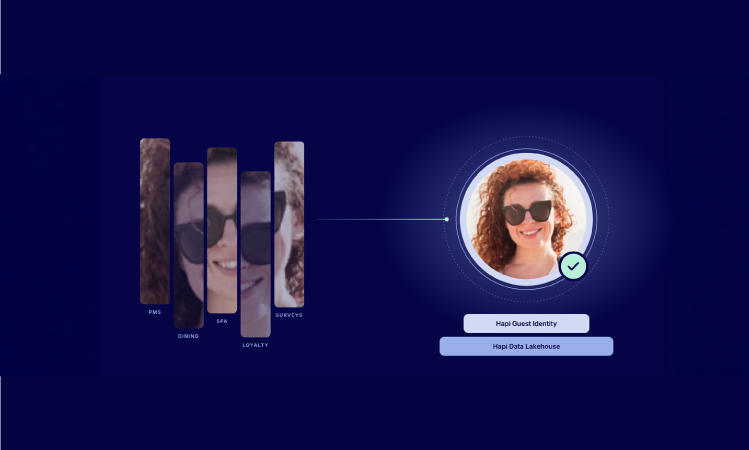
Can a guest be recognized across applications? Can teams see consistent information without manually re-keying it? Can a brand replace one application without rebuilding everything around it? Is data available when an event occurs or does it arrive in an overnight batch?
Those are better measures of complexity than simply counting the number of systems in the stack.
The challenge becomes clear across hotel portfolios operating multiple PMSs. Different ownership preferences, acquisitions and legacy technology decisions can leave a brand with several PMSs across its properties. Rather than replacing every system to create consistency, brands can normalize data across them and deliver it to downstream applications in a common format. Properties can continue using technology that fits their requirements while the brand maintains a consistent view of data across the portfolio.
Consolidation doesn’t necessarily eliminate that complexity either. A single technology provider doesn’t always mean a single architecture. Technology suites built through acquisition can bring together products with different architectures and data models, creating integration challenges between modules even when they come from the same provider. Consolidating technology providers may simplify procurement without eliminating the underlying integration work.
AI makes data access a business requirement
AI, automation and personalization depend on access to accurate, current information from across the business. An AI application can’t act on data it can’t reach. A personalization engine can’t build a complete understanding of a guest when relevant information is locked inside separate systems.
Brands can’t predict which AI tools or use cases will matter three or five years from now, what the next acquisition will add or what new capabilities will emerge. Their underlying architecture needs to make those changes easier to absorb. Building around a closed technology environment may make it easier to use one provider’s capabilities today while limiting the brand’s ability to adopt something better tomorrow.
The same issue affects negotiating leverage and total cost of ownership. When one provider controls reservations, rates, folios and the guest record, changing providers becomes more difficult and the brand has less leverage when the contract comes up for renewal. Total cost of ownership should account for what it takes to leave a platform, not just what it costs to buy and implement.
Ask what happens to your data
A technology evaluation should answer a more fundamental question: How much control will the brand retain over its data as its needs change?
When evaluating a new technology or platform, ask:
- How easily can our data move between this platform and the other systems we use?
- Will we have access to our data when we need it, including in real time?
- Can we add or replace other applications without rebuilding integrations around this platform?
- Who controls the guest record and how can it be used across our technology stack?
- If our needs change, how difficult and costly will it be to move our data elsewhere?
Those answers determine how much freedom a brand will have to make different technology choices later.
Build for what comes next
Hotel brands can’t predict every application, acquisition or AI use case they’ll encounter in the years ahead. Nor should they have to. Their underlying architecture should give them the flexibility to adapt as those needs change.
The next system a brand adds will become part of that future architecture. Before signing the contract, understand exactly how the data gets out.


Simplify the complex hotel tech landscape
Looking to make the most of your data or better connect systems?
.avif)





.svg)