

.svg)


.svg)
.svg)


.svg)


AI in Hospitality 2026: Why Data Has to Come Before the Algorithm
Artificial intelligence is turning hospitality from a reactive business into a predictive one. Hotels in 2026 are using AI to check guests in, personalize stays, price rooms in real time, and catch maintenance issues before they happen.
But here's the part too many headlines skip: none of it works without clean, connected data behind it.
AI's impact depends almost entirely on how well a hotel's systems (PMS, CRM, POS, loyalty and guest engagement tools) are connected and how clean that underlying data is.
Key Takeaways
- AI in hospitality was valued at $90 million in 2023 and is growing around 60% a year through 2033. Source: Oracle NetSuite's hospitality AI article.
- Chatbots, revenue management models, and smart rooms only improve guest experience when they're fed consistent, real-time data from connected systems.
- AI won't replace hospitality jobs… it moves staff away from repetitive tasks and toward the human moments that make a stay memorable.
- Building an AI-ready foundation starts with connecting fragmented systems and creating a single source of truth for guest and operational data.

What AI Actually Looks Like in a Hotel Today
This isn't scripted chatbot logic anymore.
Imagine a guest books a stay, checks in through mobile, charges dinner to their room, and upgrades to a suite during their visit. In an AI-ready hotel, those events flow instantly between the PMS, CRM, POS, booking engine, loyalty platform, and guest-facing applications.
That connected data allows AI to do things that actually matter operationally: recommend the right upsell at the right moment, alert staff when a VIP guest arrives, identify guests at risk of churn, or help revenue teams spot booking trends before they impact occupancy.
Behind these experiences are technologies like machine learning for demand forecasting, natural language processing for chat and voice interactions, generative AI for marketing and guest communications, and computer vision for faster check-in experiences.
The broader smart hospitality market is projected to hit $197.2 billion by 2033, with adoption expanding across hotels, resorts, casinos, and cruise operators alike.
Where AI is Already Making a Difference
Dynamic pricing
Dynamic pricing isn't new to hospitality. Hotels have been adjusting room rates based on demand for years. What's changing is how AI can analyze significantly more variables… and react much faster.
AI can adjust rates multiple times per day using demand patterns, local events, booking pace, competitor pricing, weather, historical trends, and other real-time signals.
But these recommendations are only as good as the historical and real-time data behind them.
24/7 guest support
AI chatbots now handle many routine questions — Wi-Fi codes, early check-in requests, breakfast hours, parking information — across chat, WhatsApp, and SMS in dozens of languages.
The difference between a basic bot and a genuinely helpful one comes down to whether it can read and write to the PMS and CRM in real time.
Personalization that guests notice
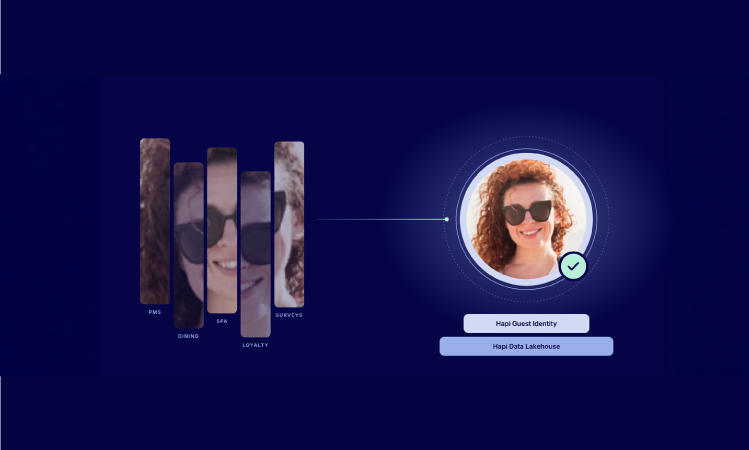
A unified guest profile containing stay history, spending patterns, preferences, and loyalty status allows hotels to deliver more relevant experiences throughout the guest journey. During the booking process and in the days leading up to arrival, AI can recommend room upgrades, late check-out, dining packages, spa treatments, or other personalized upsell opportunities based on each guest's profile and previous behavior.
Research shows that 61% of guests will spend more for a personalized experience, making personalization not just a better guest experience, but a meaningful revenue opportunity.
Smart rooms
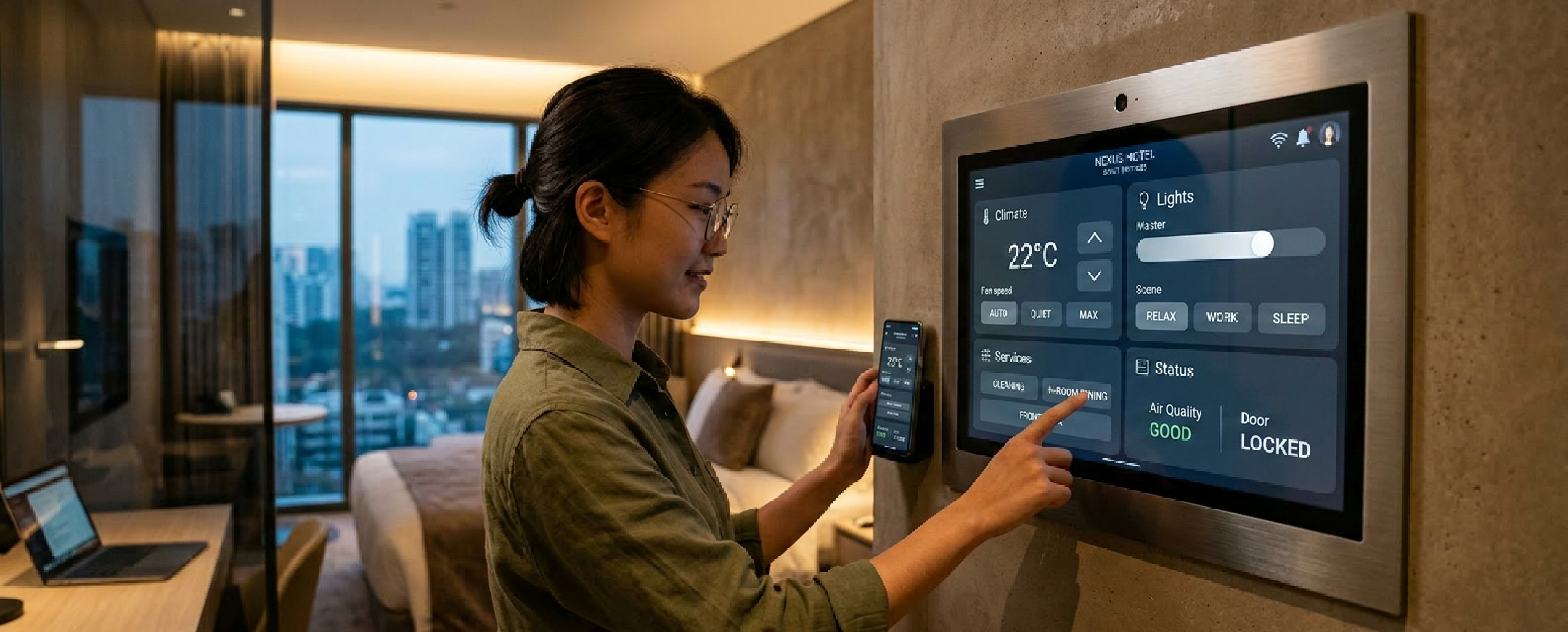
Voice-controlled thermostats, lighting, and TVs can learn guest preferences and remember them for future stays. Sensors can reduce energy consumption when rooms are empty.
Again, all of this depends on accurate, real-time signals flowing from operational systems.
Operations
With more than 70% of hotels reporting open positions they cannot fill, and housekeeping remaining the industry's most difficult role to staff, AI can help properties schedule labor more efficiently across departments and even across multiple properties based on demand forecasts, occupancy, and real-time arrivals and departures.
AI can also support operations by automatically scheduling preventive maintenance, identifying equipment that may require attention before failures occur, and helping engineering teams prioritize maintenance tasks based on urgency and guest impact.
Identity verification
Digital identity verification is beginning to streamline the arrival experience at some hotels, helping staff validate guest identities more efficiently while reducing manual processes. As adoption grows, identity data will need to sync securely across hotel systems while meeting privacy and consent requirements.
The Real Benefits
The biggest benefit of AI isn't just that it provides efficiency during the ongoing labor shortage, but also that it gives hoteliers more time to focus on guests.
Instead of spending time answering the same questions over and over, front desk teams can focus on arrivals and service recovery. Revenue teams spend less time pulling spreadsheets and more time making decisions. Housekeeping managers can prioritize rooms based on real-time arrivals and departures instead of static schedules.
When the data behind these decisions is accurate and connected, AI becomes less about automation and more about removing friction from daily operations and creating more opportunities for meaningful guest interactions.

The Real Blocker Isn't the AI
Here's where many hotel groups get stuck: multiple PMS across properties, a CRM that’s not properly connected to the loyalty and marketing tools, and no single source of truth about the guest.
The 2026 Hotel Operations Index found that only 11% of hotel operators have a fully integrated technology stack.
Layer AI on top of fragmented systems and disconnected data, and it simply makes bad decisions faster. As Brad More recently explored in We Can Lead Your AI to Data, But We Can't Make It Think, AI doesn't fail because it isn't intelligent enough… it fails because the data layer underneath it is fragmented, poorly governed, and disconnected.
As Hapi CEO Jeff Bzdawka often emphasizes, AI is an amplifier, not a solution on its own. It magnifies whatever data it's given. When hotel data is fragmented, inconsistent, or inaccessible, AI will only produce faster, less reliable insights. That's why becoming truly AI-ready starts with connecting systems, cleaning and normalizing data, and making it accessible across the organization. Only then can AI become a meaningful competitive advantage.
[Embed: Jeff on The Modern Hotelier podcast]
The Missing Piece: Connected Data
Most AI initiatives in hospitality succeed or fail based on data quality and connectivity rather than the algorithm itself.
Hotels operate dozens of systems that were never designed to speak to each other. Reservations live in one platform, guest preferences in another, loyalty information somewhere else, and operational data somewhere else entirely.
Creating an AI-ready environment means bringing those systems together and making data available in real time.
When a reservation is made, a guest checks in, or a room changes status, those events should be available instantly to every application that needs them — not hours later through batch files or manual exports.
The hotels that build this foundation today will be the ones best positioned to take advantage of whatever AI innovations come next.

A Fast Roadmap to Get Started
- Pick one or two clear goals, such as reducing call volume, increasing direct bookings, or improving upsell revenue.
- Get your data in order first by auditing where guest data lives and cleaning up duplicates before selecting any AI tools.
- Choose AI solutions that fit your existing technology ecosystem and can work with real hotel data, not just a demo environment. (Our AI Grid framework can help teams think through whether they're investing in internal productivity, guest-facing service, or strategic platform capabilities.)
- Pilot, measure, and adjust with feedback from front-line teams.
- Scale once the data foundation holds up, while keeping humans involved in high-stakes decisions such as pricing overrides or VIP recovery situations.
AI is turning hospitality into a faster, more personal, and more efficient business. The hotels that win won't necessarily be the ones with the flashiest tools. They'll be the ones whose data is clean and connected enough to actually use them.
Ready to get your hotel's data AI-ready? See how Hapi's connectivity platform can help.


Simplify the complex hotel tech landscape
Looking to make the most of your data or better connect systems?
.avif)




.svg)